Educational competition in South Korea may have contributed to incidents of bullying. The educational fever is high in South Korea with education as a core factor in the development of the economy (Lee, 2006). On the other hand, education is also used to obtain a higher social status and improve one’s economic standing.
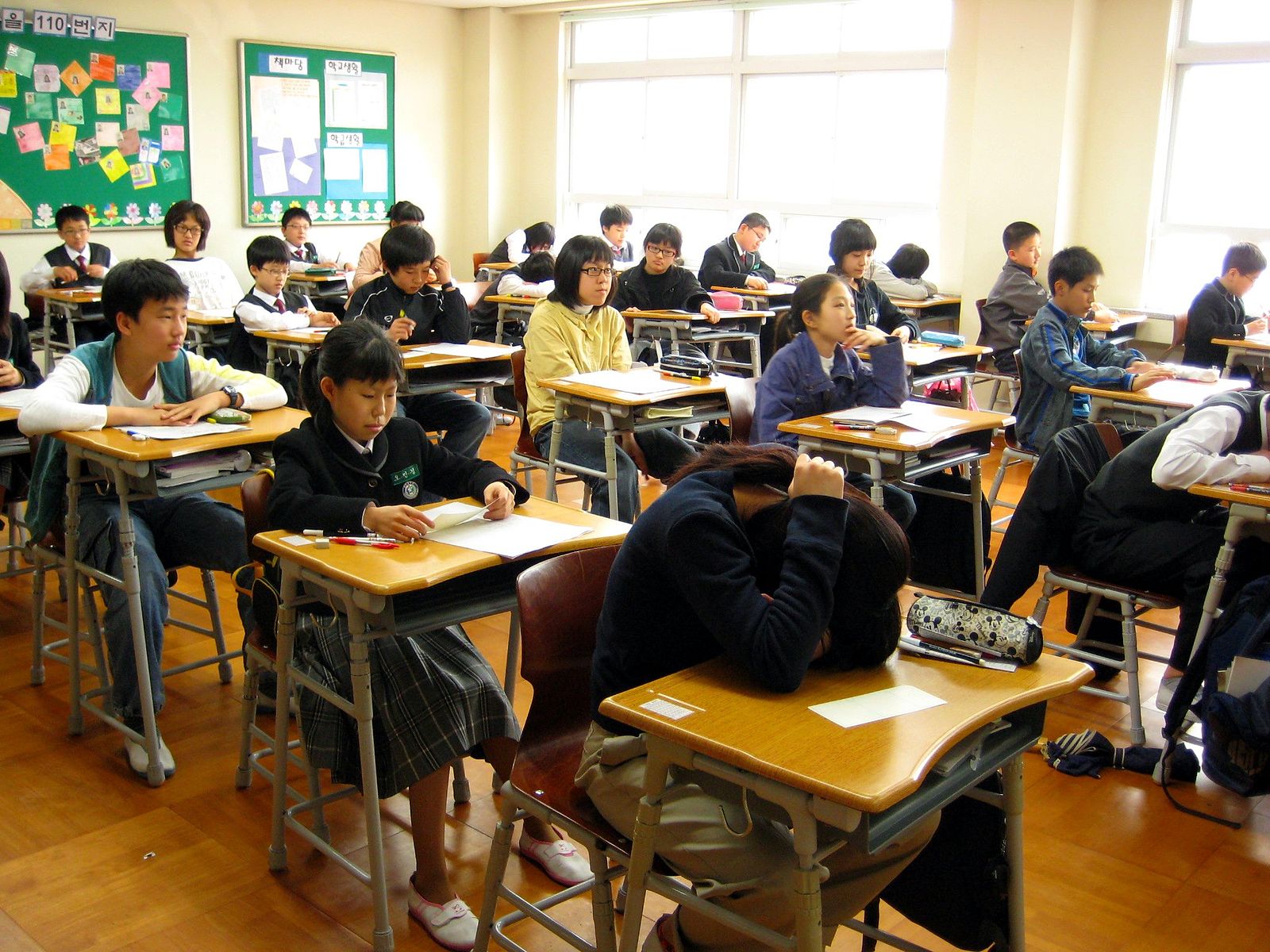
Realistically, a typical South Korean teenager spends on average 14 hours a day studying. In addition, a large number of students spend extra hours of tutorial sessions after school. For many students, this is a way of life and this is what they must do to succeed and get ahead (Lee & Larson, 2000).
Such high level of competitiveness in the school setting is inevitably stressful for a number of adolescents, and have contributed to their level of bullying behavior according to the General Strain Theory.
The General Strain Theory specifies that individuals experiencing various types of strains are more likely to engage in deviant behaviors. These strains include:
- failure to achieve positively valued goals
- Homelessness and unemployment
- Parental rejection
The strains include a wide variety of stress factors, including failing to achieve important goals – a commonly found strain in the highly-competitive South Korean school context. Youths experience high levels of stress from the emphasis on academic achievement and preparation for competitive college entrance examinations. Deviant behaviors that may be triggered by such strains include delinquency and bullying. Evidence for the General Strain Theory has been especially salient in studies of schools from Western cultures (Moon, 2012).
However, there has been mixed findings on the predictability of the General Strain Theory on bullying in South Korea. Some studies have found a negative correlation between exam-induced strain and engagement in bullying (Moon, 2012).
A possible explanation is that stress about school work often leads the student to spend more time and energy on studying, thereby minimizing the opportunity to engage in bullying. The same study has also found that, contrary to the prediction of the General Strain Theory, South Korean youth who have been victimized through bullying are less likely to bully others. Perhaps, bullied youth may turn more timid, passive and nonassertive, thereby preventing them from passing on the bullying behaviors to other people.