Internet usage has surged particularly in economies that have emerged out of the late 1990’s to early 2000’s, such as South Korea. Increased access to the internet creates increased exposure and opportunity for cyber bullying to take place.
According to the Pew Research Center, South Korea has the highest smartphone ownership rates in the country with 88% of respondents saying that they owned at least one (Poushter).
As a result of this growth, more teens have access to cellular devices that have access to multiple applications and text messages, thus providing them yet another platform for teens to engage in cyberbullying.vThe easy accessibility to the internet through cellular and computer devices, have caused a rises in cyberbullying, especially with teens in South Korea.
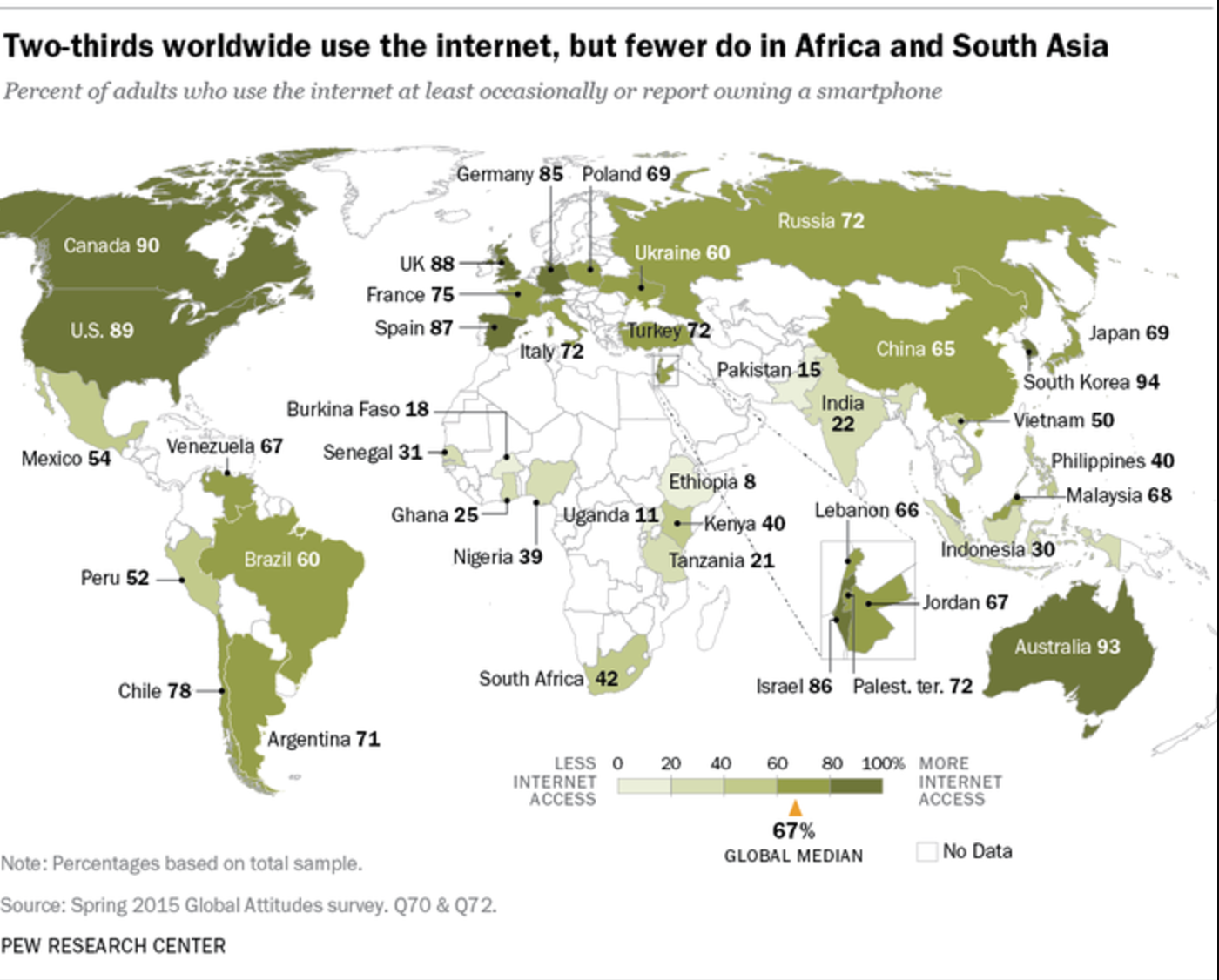
In addition to South Korea’s highly competitive nature of academic life, the internet has evolved into a dangerous medium for students to bully. Given that a high percentage of schoolwork is done online through gathering research, reading articles, and writing reports, students internet usage has increased by nearly 60% since 2007 (Poushter).
Students are increasingly spending more time on online services, raising the possibility of an individual to take part in cyberbullying. The temptation and ease of access to online social sites causes students to effortlessly engage in cyberbullying. In the past, social media sites