One intervention program that focuses on the aspect of peer-life is “FRIENDS”, a didactic approach to improving peer relationships of elementary school students who are identified as bully victims in school (Hong et al., 2013). Participants in the program, which consisted of 29 fifth graders, were taught how to form positive peer relationships. This increased their self-esteem and self-confidence and decreased the likelihood of victimization. These students also reported better school adjustment than non-participants (Hong et al., 2013).
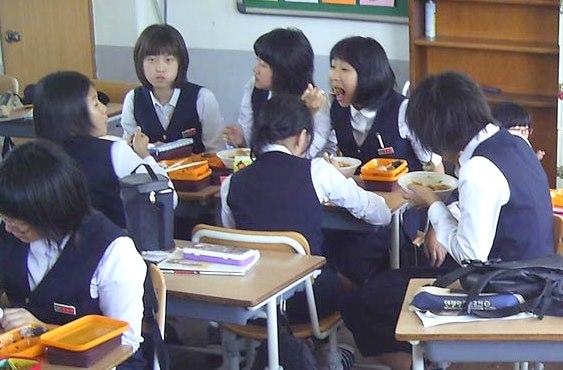
Other intervention researchers in South Korea have targeted children’s social skills which suggests that bullies and victims lack social skills or other qualities that can ease everyday social interactions. A study conducted by Fox and Boulton (2005) found that a sample of 330 students (ages 9–11) had social skills problems which were significantly higher among bullying involved youth than among non-involved youth, in both self- and teacher-reports. Intervention strategies which improve social skills and social acceptance have reportedly been effective in reducing bullying and peer victimization, South Korean researchers have consistently reported that intervention programs that emphasize social skills training have shown to enhance children’s prosocial behaviors and inhibit aggressive behaviors (Hwang & Kim, 2006).
Moreover, bullying victims who participated in programs that foster children’s social skills, such as the social skills improvement program and interpersonal training program displayed higher levels of self-esteem and self-confidence compared to non-participants.
Other literature have studied the importance of friendships as a buffer against bullying. Hong’s (2002) study, which included a sample of 200 elementary school students in Daegu city, examined the effectiveness of an intervention program that promotes friendship using a pre-post design with a control group. Results indicate that children who participated in the program showed a significant decrease in peer victimization and an increase in social skills, compared to the control group. The results suggest that programs which focus on developing and enhancing positive friendships among bullying victims can protect them.
Yet other fields have focused on attempting to promote empathy for bully victims. The underlying goal of these programs is to teach uninvolved students to be aware of the bullying and social exclusion and to provide caring support for bullying victims, which can alleviate their distress and enable them to better resist (Yoon et al., 2009). Such programs are essential because they raise students’ awareness and concerns about bullying situations, which can result in more positive and respectful behaviors among all students. Though there hasn’t been a lot of research dedicated to testing this phenomenon, one of the few studies that specifically address empathic responding and bullying behavior in South Korea was conducted by Shim (2009) who reported that empathy training programs foster positive peer interaction among all students, and, consequently, bullying behavior is decreased.
In general, interventions that target the peer microsystem in ways that promote empathy and awareness can exert a positive influence on decreasing the climate of bullying or by providing a buffer for bullying victims.