What is PTSD?
PTSD stands for Post-traumatic Stress Disorder, and is a mental health condition that is brought about by a traumatizing event or series of events, and lasting symptoms include but are not limited to nightmares, flashbacks, heavy anxiety, and uncontrollable thoughts about the incident (Mayo Clinic Staff, 2017).
The symptoms of PTSD are often further categorized into three different groups (Rosshandler et al., 2016):
- Reliving the event – flashbacks, memories nightmares
- Avoidance – detachment, numbing of emotions
- Arousal – hypervigilance/hyperactivity, irritability, inability to concentrate
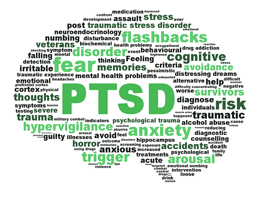
Source – https://commons.wikimedia.org/wiki/File:PTSD.png
Symptoms of PTSD may manifest immediately after the traumatic event, or may take several years to take hold. The severity of symptoms can also vary greatly, and may sometimes occur simultaneously with depression, suicidal tendencies, anxiety, and substance abuse. Diagnosis may include both a physical and psychological exam, and treatment may include some form of psychotherapy and/or medication (Mayo Clinic Staff, 2017).
PTSD in Israeli Youth
In one study by Pat-Horenczyk, a total of 6.8% of Israeli students were found to meet the criteria for PTSD using the UCLA PTSD Reaction Index, and an additional 8.6% of the students displayed partial symptoms. In an analysis of multiple studies conducted by Pat-Horencyzk and other colleagues, it was found that 5-10% of Israeli adolescents displayed severe PTSD symptoms, with an additional 8-10% reporting partial symptoms (Pat-Horenczyk, 2009). Whatever the exact statistics, it is clear that there is a disproportionately high percentage of Israeli youth suffering from PTSD, with a direct cause being identified as the prolonged conflict between Israel and Palestine.
Evidence to support to above claim can be found in a study conducted by Solomon and Lavi, in which they found roughly 12% of Israeli youth living in the Jerusalem area displayed moderate to severe symptoms of PTSD, whereas a much larger percentage of 27.6% of Israeli youth living in disputed territories reported the same level of symptoms (Pat-Horencyzk, 2009).
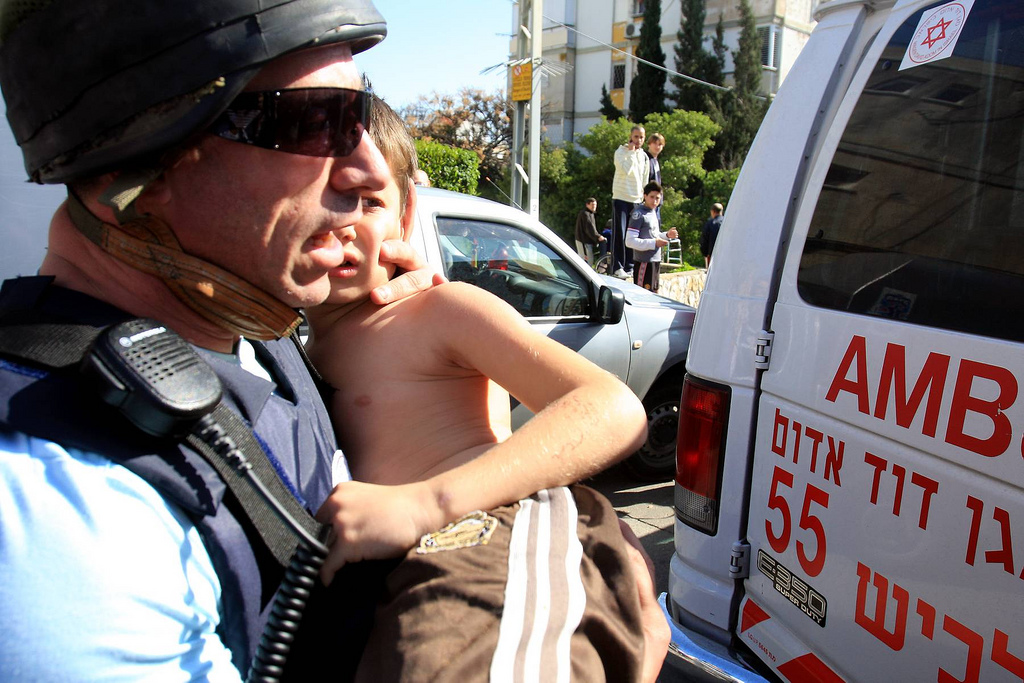
A wounded Israeli Child is taken to hospital after Rocket Attack
Attribution: Edi Israel
Source – https://www.flickr.com/photos/36313307@N06/3350227650/sizes/l/
Protective and Risk Factors
The Risk and Protective Factor Model is a psychological framework used to identify protective and risk factors that help predict risk of developing psychopathology, or tendency to remain resilient. Protective factors refer those that may aid or prevent an individual from developing a given mental illness or experiencing psychological distress, and risk factors are those that may increase an individual’s susceptibility (Dubow et al., 2012).
A significant number of studies have demonstrated that exposure to political violence is correlated with an increased risk of PTSD in Israeli youth. However, there have also been many other factors found to correlate with an increased risk. Listed below are a number of risk factors found to be associated with PTSD in Israeli youth (Pat-Horencyzk et al., 2009; Dubow et al., 2012):
- Increased exposure to violence/conflict
- Religiosity (associated with increase in PTSD symptom severity)
- Age (associated with increased risk for suicide ideation)
- Being female (more likely to receive PTSD diagnosis)
- Having a personal “near miss” experience
- Low self-esteem
- Little positive parenting
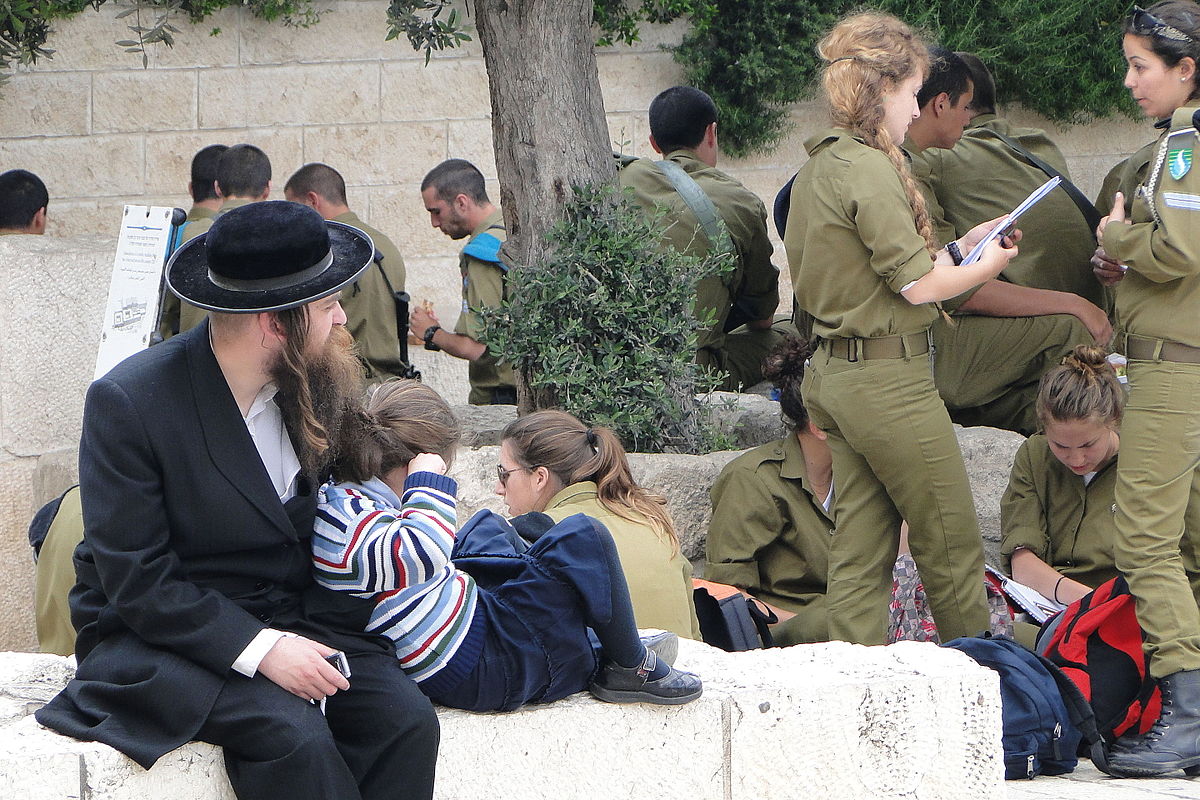
Orthodox Father and Child with Soldiers in Jerusalem
Attribution: Adam Jones
Source – https://www.flickr.com/photos/adam_jones/5676149883/
Certain protective factors were also found to decrease the risk of developing or displaying symptoms of PTSD, and are listed below (Pat-Horencyzk et al., 2009; Dubow et al., 2012):
- Sense of belonging to a community
- Perceived social support from family
- Perceived social support form peers
- Higher parental education
- Being male
- Higher economic status
- Higher self-esteem
- Positive parenting
While exposure to conflict is still the greatest determinant of resulting trauma, it can be seen that it is not the sole variable. In order to protect Israeli youth from PTSD, it is paramount that any protective factors within human control are maximized, while risk factors are simultaneously minimized. For example, providing communal support for Israeli youth that increases their sense of social support may serve as a buffer for any psychological distress. Greater success in academics may boost self-esteem, bolstering yet another protective factor (Dubow et al, 2012).
Additionally, factors such as higher economic status and higher parental education also suggest other cross-sectional identities that may influence a child’s susceptibility to developing PTSD. Israel is far from a homogeneous country, and differences in gender, race, religion, and socioeconomic class may all contribute to varying risks (Rosshandler et al., 2016).